
It starts with a screenshot in a WhatsApp group.
A friend of a friend has turned £5,000 into £150,000 trading a coin named after a dog, or a biotech firm with a breakthrough that hasn’t cleared a single clinical trial.
You feel that familiar itch in your chest…
The fear of being left behind.
You buy in.
Two weeks later, you’re up 300%.
You start mentally picking out the colour of your new car.
You tell your partner that this is the one.
Then, the correction starts. It’s just a healthy pullback, the influencers say.
You buy more.
Three months later, you’re back at your entry price.
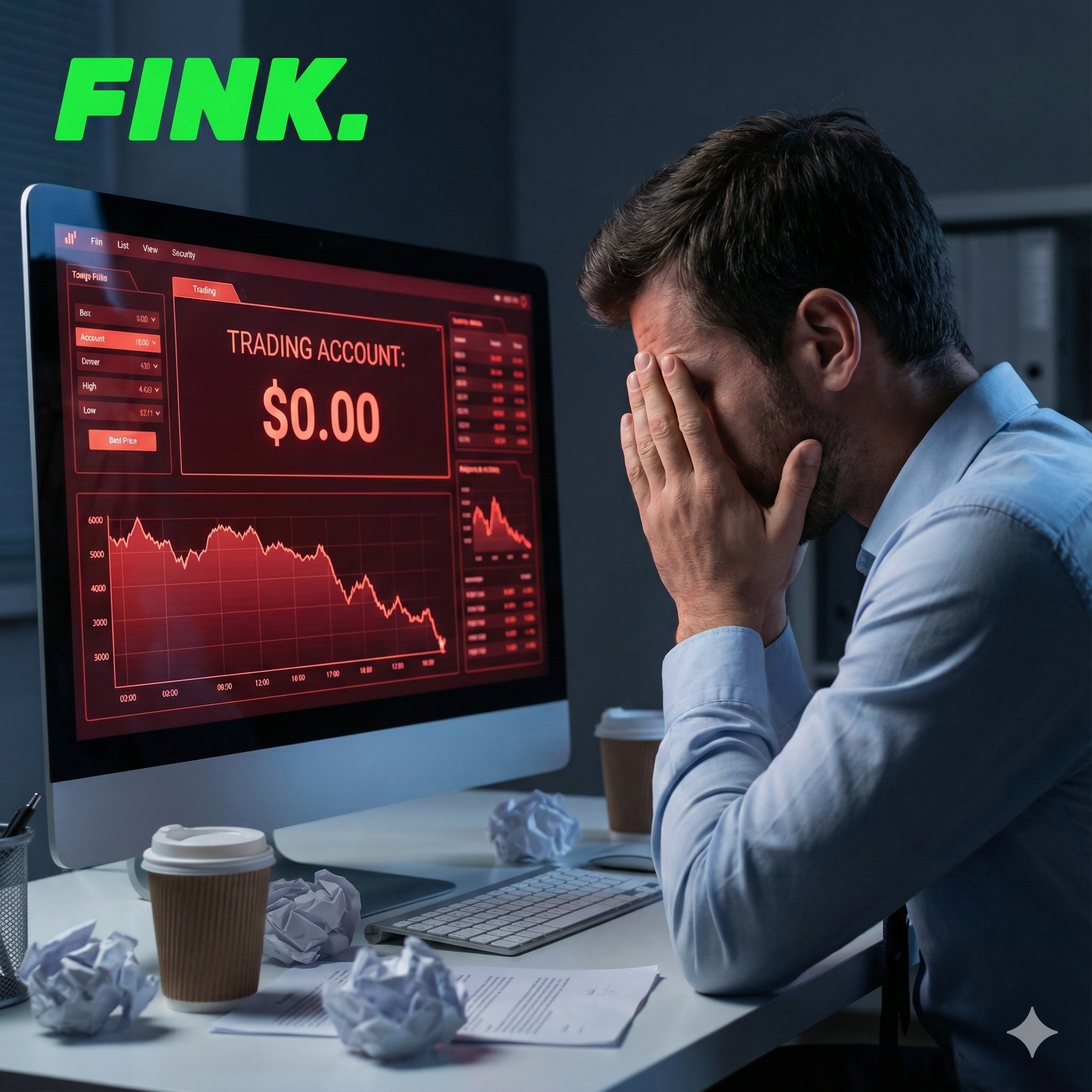
Six months later, you’re down 80%, staring at a screen of digital red, wondering how a sure thing turned into a shafting.
You just completed a round trip.
This is the dark side of momentum investing: riding a trend all the way up, and failing to exit when the factor breaks.
You aren’t alone…
Data from retail-heavy platforms during the 2020-2022 crypto cycle suggests that over 70% of participants failed to take a single penny of profit during the peak.
They had a great ride but ultimately, that two year period was completely wasted.
Most people blame the market.
They say crypto is just like that or small caps are too rigged.
But most people round-trip because they think they are trading an asset, when they are actually trading a factor and have no idea what this means or how to translate this into a system that works for them.
The asset is just a wrapper
Whether you are buying bitcoin or a micro-cap tech stock, you aren’t really buying a technology or a product.
You are buying a factor.
Think of factors as the underlying DNA of an investment.
Nobel laureates Eugene Fama and Kenneth French revolutionised finance by proving that asset returns aren’t random, but explained by specific risks like market beta, size, value, and later, profitability and investment.
- The amateur focuses on the asset… the logo, the community, the story.
- The professional focuses on the factor… the engine that actually moves the price.
If you don’t understand the factor driving your returns, you won’t know when the engine has stalled.
You’ll be sitting in the car, pumping the accelerator, while the fuel tank is empty.
When you buy a speculative stock, you aren’t buying the CEO’s vision, you are buying the market’s current appetite for high beta (volatility) and cross-sectional momentum.
If that appetite vanishes, the vision doesn’t matter because there is no quality.
The volatility illusion: why everything feels faster now
In the old days of the S&P 500, a market cycle might take seven years to play out. You had time to see the cracks. Today, we live in an era of extreme time compression. If the traditional market is a luxury liner, crypto and small-cap tech are jet skis. They turn on a dime.
In crypto, full market cycles – accumulation, mania, distribution, and depression – often conclude in under two years. In speculative small caps, a sector-specific hype like electric vehicles or AI can go parabolic and collapse within a single calendar year.
Because of this speed, the momentum factor disappears overnight.
There is no gentle cooling-off period.
It is a vertical drop.
By the time you’ve read the quarterly report or the latest whitepaper, the asset has already tanked to shit.
This is why buy and hold is often the worst possible advice for speculative assets… it’s a strategy designed for a luxury liner, being applied to a jet ski in a hurricane.
Momentum investing vs. quality: understanding the mechanics
To survive, you have to stop looking at the logo and start looking at the mechanics. You need to categorise everything into two buckets: the engine and the anchor.
Crucially, these are not mutually exclusive. The best investments—the “compounders”—are those rare assets that possess both strong momentum and high quality.
1. The momentum factor (the engine)
Momentum is the tendency of an asset to keep moving in its current direction simply because it is already moving. It’s a self-fulfilling prophecy fueled by liquidity.
Academics define this specifically as time-series momentum (TSMOM), which measures an asset’s trend against its own past performance, typically over a 12-month lookback period.
Over the last 15 years, bitcoin has been the global king of TSMOM. When the global money supply expands and liquidity is abundant, momentum assets fly.
But momentum is a fickle friend. It requires constant fuel in the form of new buyers and cheap credit, or a powerful enough view on forward expectations to power through any negative views on the market.
For a deeper dive into how to trade this factor systematically, read our ultimate guide to momentum stock investing.
2. The quality factor (the anchor)
Quality is the boring stuff that matters when the party ends – strong balance sheets, consistent cash flows, and established competitive moats.
- Quality in Equities: Defined by Robert Novy-Marx’s Gross Profitability metric, which looks at revenue minus cost of goods sold, divided by total assets. High profitability often acts as a safety harness during downturns.
- Quality in Crypto: Defined by on-chain metrics like the MVRV Z-Score, which compares the market value to the realised value (the cost basis of all coins). A low score indicates undervaluation (quality zone), while a high score signals overheating.
This is where the round-trip happens. People see the momentum working in a specific sector and think they can apply the same buy and hold logic to every piece of junk within that sector.
- High quality (BTC / blue chip equities): You’d be happy to hold bitcoin or NVIDIA for a decade. They have an anchor. When the storm hits, they stay in the harbour. If you want to find these types of assets, you need a strategic blueprint for long-term buying.
- Low quality (memecoins / speculative small caps): These are junk assets that catch a momentum wave. They have no anchor. When the wind changes, they are blown out to sea and never seen again.
The doom scenario occurs when an investor confuses a low-quality momentum play for a high-quality long-term hold.
NBER research into retail trading behaviour shows that investors often act as contrarians in stocks but follow a momentum-like strategy in crypto, leading them to hold through large price peaks because they view rising prices as a sign of future adoption rather than temporary speculative upside.
The data behind the destruction: why “junk” never recovers
The reason round-trips are so devastating in the junk category is that these assets lack mean reversion to the upside.
- Survivorship Bias: we look at Amazon’s 90% drawdown in 2000 and think, ‘I just need to hold through the pain.’But for every Amazon, there were a thousand Pets.coms that went to zero.
- The graveyard stats: in the 2017 crypto bull run, there were over 2,000 Initial Coin Offerings (ICOs). Today, fewer than 5% of them are trading above their launch price. In the 2021 small-cap SPAC boom, nearly 80% of companies that went public via a shell company are now trading at a 70% discount or more.
They wait for a recovery that will never come.
Why? Because without the momentum factor, these assets have zero intrinsic value. They don’t just correct: they die. They exist only as long as the hype lasts, and when the hype moves on, they are nothing but digital crap.
Spotting the shift: when the party ends
To avoid being the last one at the bar, pissed, sad and not wanting the party to end while all your mates have already said bye, when the lights come on, you have to stop listening to narratives and start tracking the precise metrics that signal a factor shift.
| Metric | Factor implication | Sign of the end |
| Net Liquidity (Global) | Fed + ECB + BOJ + PBOC Balance Sheets | Contraction in total assets (QT) |
| US Dollar Index (DXY) | Denominator of risk assets | DXY breaking above the 20-week moving average |
| Yield curve (2s10s) | Recession probability | Curve inversion followed by rapid steepening (bear steepener) |
| Retail participation | Exhaustion of momentum | Parabolic spikes in Google search volume for ‘how to buy
$$asset$$’ |
| Asset correlation | Systemic liquidation | Correlation coefficient > 0.8 across unconnected assets |
A key indicator of a market top is the dash for trash: when high-quality assets like bitcoin or big tech move sideways, but total junk starts going parabolic. Data from the JPMorgan Chase Institute suggests that retail portfolio risk (beta) often stays elevated even as the momentum factor stalls, confirming that retail participants rarely deleverage when the cycle turns.
The factor-first workflow
If you want to stop the round-trip cycle, you have to be cold-blooded. You need a hierarchy of analysis that removes the emotion of the story.
- Analyse the macro-regime first: is the environment risk-on or risk-off? Look at the US dollar index and treasury yields. If the dollar is ripping and yields are climbing, the cost of capital is rising. This is poison for momentum assets.
- Analyse the factor second: is the market currently rewarding high-octane momentum, or is it fleeing to the safety of quality? In a bear market, value and quality (high cash flow) outperform. In a bull market, high beta and momentum lead the way. Never bring a momentum strategy to a quality market.
- Attribute the strategy: if you’re playing a momentum factor, your strategy is simple: you ride the trend until the trend breaks. You use trailing stops. You take profits into strength. You do NOT buy the dip on a momentum asset that has lost its trend. If you’re playing a quality factor, you can afford to weather the volatility and dollar-cost average.
- Pick the asset last: find the ticker that best expresses the factor you’ve identified. If it’s momentum, find the asset with the highest Relative Strength compared to its peers (not RSI, but comparative performance). If it’s quality, find the one with the cleanest balance sheet.
The psychology of the “HODL” trap
The hardest part of factor analysis isn’t the maths or analysis…
It’s the ego.
When you’ve spent six months learning about a specific crypto project or a disruptive small-cap stock, you feel like you owe it your loyalty.
This is known as the disposition effect: the tendency of investors to sell assets that have increased in value, while keeping assets that have dropped in value.
The market, however, is not a loyal spouse.
It is a cold, calculating machine that reprices factors in real-time. HODLing was a term coined for bitcoin because bitcoin has the quality to survive a winter.
Applying that same loyalty to a memecoin or a speculative biotech firm is a form of financial suicide.
You are essentially saying, I am willing to lose 100% of my capital because I like the logo.
The survival of the analyst
The graveyard of the last fifteen years is filled with people who were right about an asset but wrong about the timing. They were right that the technology was revolutionary, but they were wrong to hold a momentum play during a quality-driven bear market.
The round-trip isn’t something to laugh at because it’s a sign of a failed framework. It means you were a passenger on a move you didn’t actually understand – and all that matters is how much you extract from the market.
By starting with factors, you stop being a fan and start being an allocator.
You stop hoping the market goes up and start understanding why it does.
In a world of extreme volatility and time compression, factor awareness it is the only way to keep what you earn.
The goal isn’t to be right about an asset…
The goal is to be on the right side of the factor until it’s time to get out.
Frequently asked questions (FAQ)
What is momentum investing?
Momentum investing is an investment strategy based on buying assets that have had strong recent returns (winners) and selling assets that have performed poorly (losers). The core premise is that market trends tend to persist due to investor psychology and liquidity flows. It is distinct from value investing, which seeks undervalued assets regardless of their current trend.
Why is momentum investing dangerous for beginners?
The biggest risk in momentum investing is the reversal crash. Beginners often mistake momentum for long-term quality, leading them to hold speculative assets during a crash, resulting in a ’round trip’ of their gains. However, when combined with quality fundamentals, momentum can be a powerful long-term wealth builder.
How is momentum different from ‘buy and hold’?
‘Buy and hold’ is a passive strategy best suited for high-quality assets (like broad market indices or blue-chip stocks) that have a history of recovering from downturns. Momentum investing is an active strategy that requires you to exit the position once the trend is invalidated. Applying a ‘buy and hold’ mentality to a momentum asset is the primary cause of retail portfolio destruction.
Is momentum detached from fundamentals?
Not necessarily. While speculative momentum (often seen in memecoins or junk stocks) can be purely price-driven, high-quality momentum assets often have improving fundamentals, earnings growth, or network effects driving the price. The best investing strategies often target the intersection of both momentum and quality.
Note: this article is for educational purposes and does not constitute financial advice. Always perform your own due diligence based on your specific risk profile.